
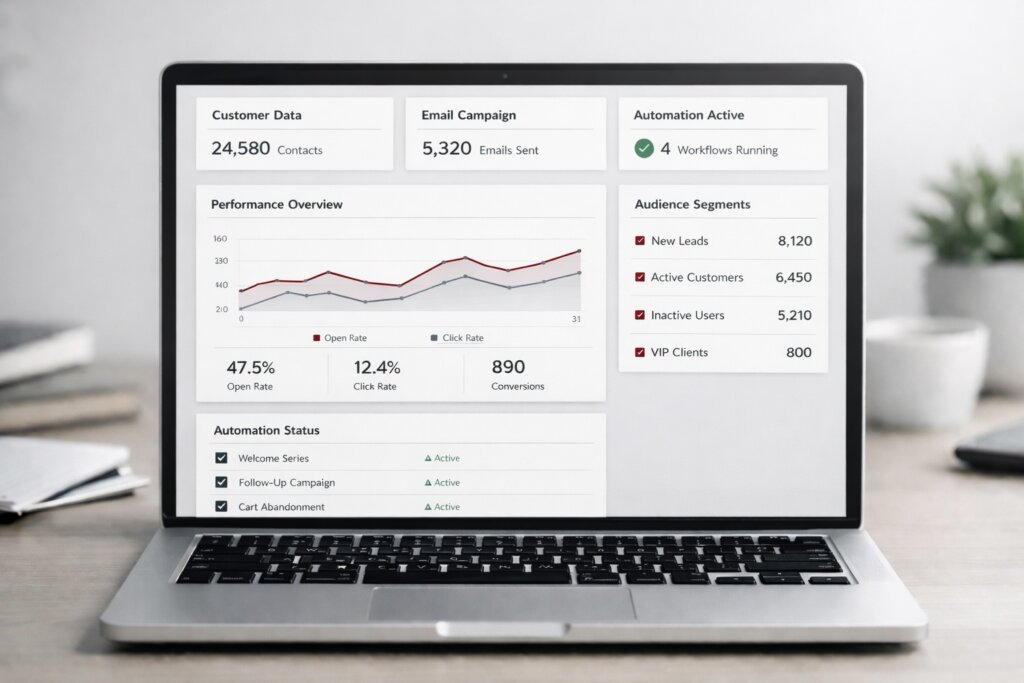
Unpopular opinion: email still produces the strongest ROI in digital marketing.
I say this often and people assume it’s because I’ve been in marketing for a long time. But the reason isn’t nostalgia, it’s structure.
Email is one of the most direct relationships a brand can have with a customer. Social platforms control distribution. Ad platforms control targeting. Search engines control visibility. But when someone gives you their email address, you control the relationship.
That shift changes everything. Instead of competing with algorithms or paying for attention, your brand has a direct line of communication with the people who want to hear from you.
A well-designed email marketing strategy isn’t just a channel. It’s a communication system that strengthens relationships and supports long-term growth.
Email Marketing Expands Your Capacity
A proper email marketing strategy doesn’t just help you send messages. It increases your operational capacity.
Automation allows your business to communicate consistently without requiring constant manual effort. Something as simple as confirming that a message was received can immediately reassure a customer that your brand is attentive and responsive.
From there, automation can extend the relationship through welcome sequences, educational content, and thoughtful follow-ups that help customers better understand your product or service.
Instead of every interaction requiring a team member’s time, the system maintains communication in the background while your team focuses on higher-value conversations. This isn’t about replacing human interaction. It’s about protecting it by removing the repetitive work that slows teams down.
Email Marketing Strengthens Customer Relationships
Email allows brands to nurture relationships over time in a way few other channels can.
Through consistent communication, businesses can share insights, answer common questions, and keep customers engaged long after the initial interaction. Instead of relying on occasional promotions, email creates a steady rhythm of communication.
Unlike social media, where messages compete for attention in crowded feeds, email is direct and intentional. When someone opens an email from your brand, they are choosing to hear from you.
Over time, this builds familiarity and trust. Customers begin to recognize your voice, understand your value, and feel more comfortable engaging with your business.
That trust compounds.
The Strategic Value of First-Party and Zero-Party Data
Beyond communication, email marketing provides something even more valuable: ownership of your data.
First-party data is information your business collects directly from customer interactions with your website, products, and communications. This includes things like purchase behavior, engagement patterns, and customer preferences.
Zero-party data goes a step further. It includes information customers intentionally share with your brand, such as interests, goals, or preferences.
Together, these insights give businesses a clearer understanding of their audience than any third-party platform can provide. Because the data belongs to your business, it isn’t dependent on algorithms, advertising platforms, or policy changes outside your control.
As privacy regulations evolve and advertising platforms limit data access, first-party relationships will only become more valuable.
Businesses that invest in a strong email marketing strategy today are building stability into their marketing tomorrow.
Why Email Marketing Supports Scalable Growth
A well-designed email marketing strategy does more than send newsletters. It becomes part of the operating system of a business.
Email helps qualify leads before sales conversations happen. It educates potential customers so teams spend less time answering introductory questions. It keeps existing clients engaged so relationships continue long after the initial purchase.
Over time, email becomes a communication infrastructure that supports marketing, sales, and customer success simultaneously.
When integrated with CRM systems and automation platforms, email marketing can guide customers through every stage of their journey with your brand.
That kind of structure doesn’t just improve communication. It improves efficiency across the entire organization.

Building an Email Marketing Strategy That Works
Effective email marketing isn’t about sending more emails. It’s about sending the right communication at the right time.
A strong strategy typically includes lifecycle sequences that guide customers through key stages of their journey, automated responses that acknowledge interactions, and educational content that builds trust over time. CRM integration allows engagement and behavior to be tracked, while thoughtful segmentation ensures communication stays relevant.
When these elements work together, email marketing becomes more than a campaign channel. It becomes a system that strengthens relationships and supports sustainable growth.
The Long-Term Advantage of Email
Digital marketing channels come and go. Platforms evolve, algorithms shift, and advertising costs fluctuate. Email remains consistent because it’s built on a direct relationship between a brand and its audience.
That stability is one reason email marketing continues to outperform many other digital channels in long-term return on investment. For organizations focused on building sustainable growth systems, email isn’t an outdated tactic.
It’s foundational infrastructure.