

I’ve been doing this a long time, and the things a lot of founders don’t design for still surprise me.
Not marketing itself, but everything that happens before and after it. Customer service. Product fulfillment. Post-sale experience. How the brand shows up online once people start paying attention. Even something as simple as knowing which channels actually make sense for the business and which ones don’t.
A lot of people know how to market.
But what happens when the marketing system actually works?
That’s the part most businesses aren’t prepared for.
Growth Exposes Parts of a Business
Marketing has a way of exposing operational weaknesses very quickly. A business can survive inefficiency when things are slow. Manual follow-ups feel manageable when lead volume is low, and customer communication gaps don’t seem urgent when only a handful of people are reaching out every day.
But once visibility increases, those issues compound.
More leads mean more follow-ups. More customers mean more support requests. More orders create more opportunities for fulfillment mistakes, delayed communication, and inconsistent experiences.
What initially looks like a marketing problem is often a systems problem.
That’s why growth can feel chaotic for businesses that technically “succeed.”
The Hidden Challenge Behind Growth
One of the hardest parts of scaling a business is that founders often can’t see the patterns creating bottle necks because those patterns have become normal over time.
Manual follow-ups. Disconnected systems. Inconsistent customer communication. Repeating the same operational fixes every week instead of solving the root issue.
These are the invisible loops that slow businesses down.
At smaller volumes, they can compensate for these issues with effort. But growth puts pressure on every inefficient process at the same time. Sustainable growth eventually requires more than better marketing. It requires identifying operational chokepoints and replacing repetitive manual processes with systems that scale.
Automation, CRM optimization, customer journey design, and operational structure aren’t just efficiency upgrades. They’re how businesses stop repeating the same problems at larger volumes.
Marketing Doesn’t Operate in Isolation
One of the biggest misconceptions in digital marketing is that performance exists independently from the business behind it.
It doesn’t.
The performance of a marketing system is directly tied to operational structure. A campaign can generate traffic, but if the website experience is confusing, conversion rates suffer. A strong ad campaign can generate leads, but if customer follow-up is slow or inconsistent, opportunities disappear. Great content can build awareness, but if the brand experience changes from platform to platform, trust breaks down.
The marketing may be working exactly as intended.
The system around it just isn’t supporting the momentum.
 Growth Shouldn’t Break the Brand Experience
One thing we pay close attention to is whether the experience after the conversion matches the energy that created the conversion in the first place.
A lot of brands know how to generate attention. The problem is what happens after people buy.
The marketing can feel polished, responsive, and intentional. Then the customer experience becomes slow, inconsistent, or disconnected once volume increases. That disconnect damages trust quickly.
As businesses grow, maintaining consistency across customer service, fulfillment, communication, and overall brand experience becomes just as important as the marketing itself. Growth shouldn’t dilute the experience that made people interested in the business to begin with.
Customer Journey Mapping Reveals Where Systems Break
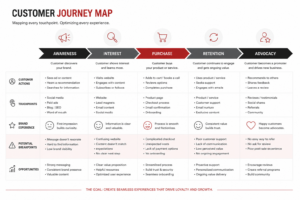
One of the most effective ways to identify operational friction is through customer journey mapping.
A customer journey map is a visual representation of every interaction a customer has with your business, from awareness to retention and advocacy. At smaller volumes, businesses can often compensate for broken touchpoints manually. But as demand increases, weak points become harder to hide.
Maybe leads are coming in faster than the team can respond. Maybe onboarding feels disconnected from the promises made in the marketing. Maybe fulfillment, communication, or follow-up starts becoming inconsistent under pressure.
Customer journey mapping helps businesses identify where the experience starts breaking because growth doesn’t just test the marketing.
It tests the entire customer experience.
The Operational Side of Marketing Matters
The parts of a business that improve marketing performance usually aren’t flashy.
Consolidating systems. Optimizing CRMs. Improving customer communication workflows. Making sure conversion tracking and tags are actually working properly.
These aren’t the things most founders get excited about, but they’re often the reason marketing succeeds or fails long term.
When systems are disconnected, businesses lose visibility into what’s actually driving performance. Data becomes unreliable. Follow-up becomes inconsistent. Teams operate reactively instead of strategically.
Over time, that bottle neck slows growth.
Scaling Is a Selection Process
Businesses aren’t just competing for visibility anymore. A lot of companies can generate leads. Far fewer can handle sustained growth without creating friction internally or damaging the customer experience externally.
That’s usually the difference between brands that experience short bursts of momentum and businesses that scale consistently over time.
Operational design becomes the filter.
The companies with clear systems, organized data, reliable reporting, strong customer communication, and scalable workflows are the ones that continue growing after the initial attention arrives.
Why We Focus on Systems Before Scale
We like to grow our clients because we like to keep our clients.
That means designing businesses that can handle momentum before momentum arrives. Sometimes that means simplifying the software stack. Sometimes it means improving the customer journey. Sometimes it means fixing CRM organization, rebuilding automation workflows, or correcting broken tracking infrastructure that has been reporting inaccurate data for months.
None of those things feel as exciting as launching a campaign.
But they’re what allow campaigns to continue performing once attention starts increasing.
With the right systems in place, growth becomes sustainable.
Structure Is What Makes Growth Sustainable
A lot of founders build businesses through creativity, instinct, and speed early on. And honestly, that energy is necessary in the beginning.
But sustainable growth eventually requires a shift from reacting emotionally to operating intentionally. From improvising to systemizing. From solving the same problem repeatedly to building processes that prevent the problem in the first place.
That transition is where operational maturity starts to happen.
The structure allows the creativity to scale consistently.
Build the System Before It Breaks
A lot of operational problems don’t become visible until growth puts pressure on them.
That’s why businesses that scale well usually invest in marketing systems earlier than expected. Not because systems are exciting, but because they’re necessary.
Marketing gets attention.
Systems determine whether the business can keep up once it arrives.