
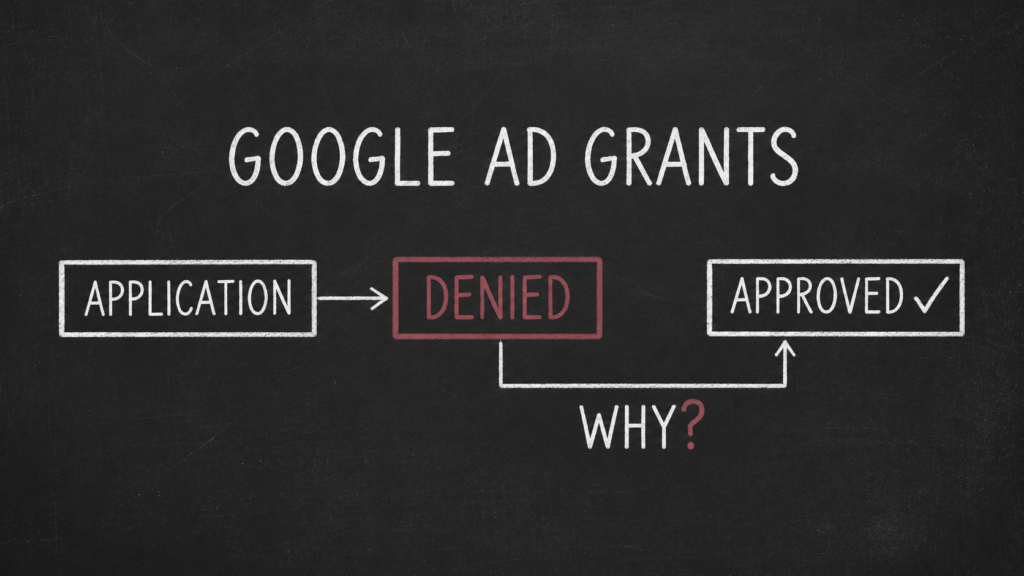
One of our nonprofit clients got excited when they heard Google Ad Grants could cover up to $10,000 USD a month in Google Search ads. I get it. That’s a lot of room to work with, especially if you’ve never had much of a search advertising budget.
We were already working with them on a CRM integration, and they wanted us to focus on that first. We went ahead and submitted the grant application early so it would be ready when we got to it.
After weeks of waiting, I started contacting support. When we finally got a response, it was a denial. As is typical with Google, the feedback was vague enough that we still had to figure out what to fix.
Once we were further along on the CRM integration work, we doubled back. We ran the site through PageSpeed Insights, addressed some of the issues it flagged, and added the nonprofit’s employer identification number (EIN) to the footer across the site. We resubmitted and got approved within two days.
Which change tipped the scales? We still don’t know.
Gotta love Google.
The Good
With the grant, eligible nonprofits have a chance to show up when somebody is already looking for what they do.
Think about someone searching for a food pantry near them, or somebody who has a free Saturday and wants to volunteer. They may have never heard of your organization. They already know what they need or how they’d like to help. If your ad shows up and takes them to a page where they can find pantry hours or sign up for a shift, you’ve made that next step easier.
That’s the part I like. You can be useful to somebody at the exact moment they’re looking.
The Bad
Somebody still has to run it, and your organization may not have a “Google person.” Somebody has to choose the search terms, check what people actually typed before they clicked, and keep an eye on the click-through rate. For accounts that use anything beyond Smart Campaigns, Google requires a monthly click-through rate of at least 5% across the account. Google also requires conversion tracking, so you need a way to measure the actions that matter to the organization.
Say you want more volunteer applications. You’ll need ads that speak to people looking to volunteer, a page that explains what they’re signing up for, and tracking that can tell you whether they actually submitted the application. If people click and the applications never come in, somebody has to figure out where they’re dropping off. Maybe the ad is attracting people looking for a different kind of opportunity. Maybe the form is a pain to fill out on a phone. Both look like a click in Google Ads.
If you have a digital person on the team, great. If that person is also writing the newsletter, updating the website, recording content, and trying to get the next fundraiser out the door, guess what’s getting pushed to next week.
The Ugly
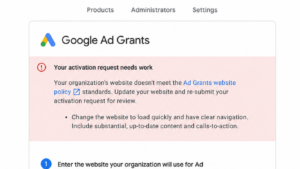
We talk about AI being a black box. Google can still feel like one, especially when you get a clear no and the why is left up to you.
Google does publish a website policy. It covers things like making your mission clear, keeping the site easy to use, and making sure the pages and links work. We use that guidance to review the site. We still had to decide what to fix first with the feedback we had. When the approval came through, we knew the application had passed. The reason for the first denial was still a guess.
I’d be excited about the grant too. Before I applied, I’d ask the team one question.
Who’s going to run this once we get approved, and what do we want people to do after they click?