
We were one of those companies.
Word of mouth marketing kept business coming in, and we did great until we weren’t doing great.
When work is coming in, it’s easy to keep your own marketing somewhere down the list. You’re taking care of clients. You’re doing good work. One project leads to another, and you figure you’ll get around to the rest.
I understand that because I’ve done it.
So when a small business owner tells me, “Most of our business comes through word of mouth,” I get it. And you know what? That’s excellent. People believe in your work enough to recommend you.
But when referrals are keeping you busy, investing in your digital presence can feel less urgent. The website could use an update. The Google profile needs attention. You’ve been meaning to get more consistent on social media. You’ll get to it.
Until referrals slow down, and suddenly those things matter a lot more.
Build around the reputation you’ve earned
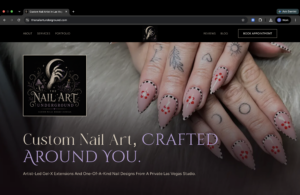
We took this approach with Christie at The Nail Art Underground, a small business here in Las Vegas.
Along with owning a nail salon, she’s an artist with a distinct creative point of view. But she’s also very similar to a lot of small business owners: wearing a lot of hats and wanting to do the work they enjoy.
She doesn’t necessarily want to be a content creator, manage a website, or learn how to run a CRM and build a nurture campaign.
You have marketers for that, right? Call me.
She already had people who knew her work and referred others to her. We built a digital infrastructure around that reputation, starting with a cohesive brand, a website, and SEO.
The goal was to help referred customers take the next step and create a way for new customers to discover the business organically.
What happens after the referral?
Let’s say you have a fan. They love what you do, and they tell somebody else about it.
Now what?
Is there a website they can go to? Can they find you on Google? Can they look at your social media and cosign what they’ve been told?
Does the business they find feel like the one their friend described? Is it clear how to book, buy, donate, or get in touch?
The recommendation has already done some of the work. Your digital presence should help them take it from there.
Usually, the pieces are there. They just don’t quite fit together. The website says one thing, social media says another, and neither fully captures what customers love about the business.
So we bring it together: what makes you different, who you serve, and how to make that clear wherever people find you.
For Christie, that meant helping people understand the personality and artistry behind the business before they ever sit down in her chair.
Give word of mouth a marketing system
Word of mouth marketing itself belongs in that infrastructure.
Do we have a process for asking happy customers for reviews? Do we ask, “Hey, do you know anybody who would be interested?” Would a referral discount make sense? Is there an easy link they can send to a friend?
Then we make sure inquiries get a response and interested people get followed up with.
Your Google Business Profile, social presence, and website should each be an asset. That’s part of how we approach search everywhere optimization: where might someone discover you or check you out, and what will they find?
Whether they arrive through a recommendation or a search, those pieces should work together to help them become a customer.
Give yourself more ways to grow
Referrals have supported our business for years. But relying on them alone leaves a lot outside your control. Customers’ circumstances change. Spending changes. Reliable sources of business can go quiet.
With the infrastructure in place, you can make more of the referrals you receive while building other ways for people to find you. You also have a foundation for whatever marketing comes next.
You’ve already done the work to get people talking about you. Let’s make it easy for the next person to become a customer.